What Counts as a “Real” Home Office When Selling a House in Northern Virginia?
A real home office in today’s Northern Virginia housing market is a dedicated, quiet space where a buyer can realistically work every day. Buyers searching homes in Fairfax County, Loudoun County, Arlington, and Alexandria increasingly filter listings for office, study, flex room, or workspace, and they expect the space to feel practical for hybrid or remote work.
For many homeowners preparing to sell, uncertainty starts with a simple fear:
“Will buyers think my house doesn’t have a home office?”
That concern is valid. Many buyers relocating to Northern Virginia for government, consulting, defense, or tech roles expect a home that supports working remotely several days per week. If the space does not clearly function as an office, buyers may mentally remove value from the home.
The good news is that a home does not need a perfectly labeled “office” to meet buyer expectations. What matters is how the space works and how clearly buyers can imagine using it.
Does a Home Office Increase Home Value in Northern Virginia?
One of the most searched questions sellers ask is:
“Does a home office add value when selling a house?”
In Northern Virginia, a functional home office can significantly improve buyer demand because so many households work hybrid schedules. Buyers moving to the region often split time between working from home and commuting to areas like Tysons, Reston, Arlington, or downtown Washington DC. When touring homes, they quickly evaluate whether a property supports their weekly routine.
A dedicated workspace signals that the home fits modern work life. Buyers picture themselves starting the day with coffee, logging into meetings, then closing the door to focus while the rest of the household continues normal activity. When that lifestyle is easy to imagine, the home becomes more appealing.
The office does not always raise the appraised value in a strict technical sense, but it often increases buyer competition, which can influence the final sale price. Homes that clearly show a usable office frequently receive stronger interest compared with similar homes where buyers struggle to see where they would work.
In areas such as Ashburn, Reston, Vienna, and McLean, where many residents work in technology, consulting, or federal contracting, the presence of an office can strongly influence buyer perception.
What Qualifies as a Home Office in Real Estate Listings?
Many sellers search variations of:
“What counts as a home office in real estate?”
In listing descriptions and buyer searches, several types of rooms can qualify as office space if they function well.
A dedicated study is the most obvious example. Many newer homes in Loudoun County or Fairfax County include a room labeled “study” or “library” near the front entrance. These spaces are designed specifically for quiet work and often have windows that provide natural light during the day.
Another common option is a flex room, which is a space designed to serve multiple purposes. In communities like Brambleton or Broadlands, flex rooms may function as playrooms, homework rooms, reading spaces, or offices depending on the homeowner’s needs. Buyers often search for these spaces because they provide flexibility as family needs change.
A converted bedroom office also counts when presented correctly. Many homeowners simply stage a spare bedroom with a desk and shelving instead of a bed. When buyers walk through the home, they immediately understand the room could function either as a workspace or a guest bedroom.
The difference between a convincing home office and a weak one usually comes down to intentional design. A small desk placed in a hallway corner rarely creates the same impression as a clearly defined room with a door, lighting, and workspace layout.
Does a Bedroom Count as a Home Office When Selling?
Another very common search question is:
“Can a bedroom be used as a home office when selling?”
The answer is yes, and in many cases it is the most effective approach. Many homes in Northern Virginia include four or five bedrooms but no official study. Converting one bedroom into a staged office helps buyers understand how the home supports remote work.
However, the decision should be guided by the typical buyer profile in the neighborhood.
In Arlington and Alexandria, where homes tend to be smaller and many buyers commute into DC, flexibility matters. Buyers may want the room to serve as an office during the week and a guest bedroom when family visits.
In suburban Loudoun County or parts of Fairfax County, larger homes attract families who want both a guest room and an office. In these homes it may make sense to stage one bedroom as an office while clearly presenting the remaining rooms as bedrooms.
The goal is to help buyers see that the home supports both daily work life and family needs.
Where Should a Home Office Be Located in the House?
Another question that appears frequently in search results is:
“What is the best location for a home office in a house?”
Buyers often evaluate office location because it directly affects productivity and noise levels. In Northern Virginia homes, three locations tend to work especially well.
A main level office near the front of the house is one of the most popular layouts. Many newer homes include a study just off the foyer. Buyers like this arrangement because it allows them to work during the day without disrupting activity in the kitchen or family room.
A basement office is also common and often highly desirable. Finished basements in areas like Centreville, Chantilly, and Ashburn frequently provide quiet, private spaces away from the rest of the home. For buyers who take frequent video meetings or need deep focus time, this separation can be ideal.
An upper level office sometimes works well if positioned away from bedrooms and high traffic areas. Buyers often appreciate this layout when both adults in the household need separate work zones.
Ultimately, buyers usually prioritize quiet and privacy more than the exact floor of the home.
How Big Should a Home Office Be?
Another search homeowners often make while preparing to sell is:
“What size home office do buyers want?”
The surprising answer is that buyers rarely require large offices. Most simply want enough space to comfortably perform their daily work tasks.
In many Northern Virginia homes, an office around 9 to 12 square meters works well if it provides room for a desk, chair, and shelving. Natural light also plays an important role because it improves the comfort of working long hours indoors.
Buyers touring homes in places like Burke, Oakton, and Fairfax often respond more positively to a smaller office with strong light and privacy than to a large room located in a noisy part of the home.
Function matters more than square footage.
Should I Stage a Home Office Before Selling?
Homeowners often search:
“Should I stage a home office when selling my house?”
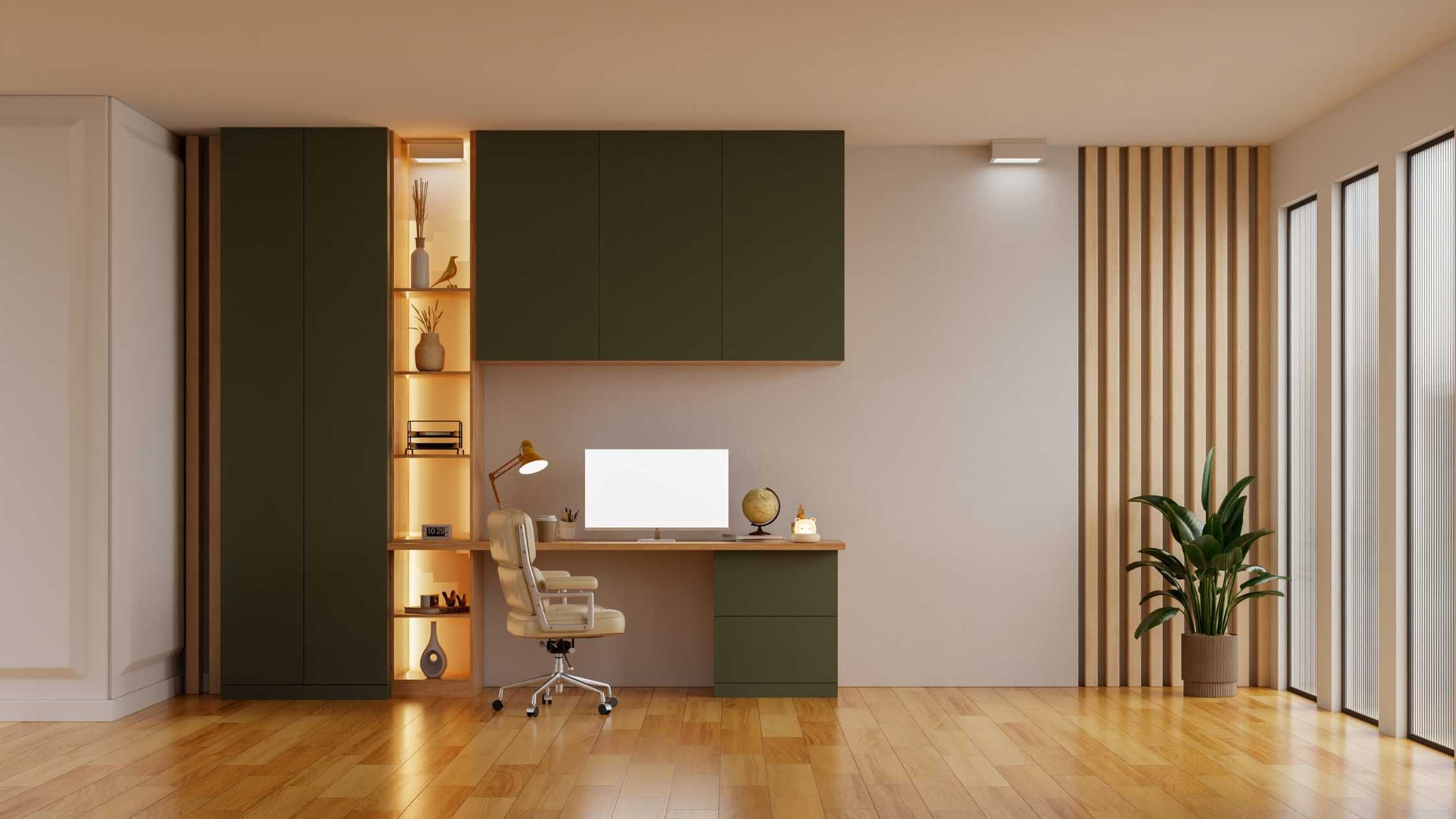
Staging an office can dramatically improve how buyers understand the home. When a room is empty, buyers may struggle to imagine how it would function. A simple staged workspace instantly communicates purpose.
For example, placing a desk near a window allows buyers to picture themselves starting the morning with natural light while reviewing emails. Bookshelves or cabinets suggest organization and productivity. Clean décor helps the room feel calm and professional.
These details make it easier for buyers to imagine daily life in the home. Instead of seeing an empty room, they see a place where they could work comfortably several days each week.
What If My House Doesn’t Have a Dedicated Home Office?
Many homeowners in older neighborhoods such as Falls Church, Arlington, and parts of Alexandria worry about this exact issue.
Homes built decades ago rarely included offices because remote work was uncommon at the time. However, buyers are often open to creative solutions if the layout supports flexibility.
Dining rooms, loft spaces, finished basements, and even large landings can often function as work areas. The key is presenting the space in a way that clearly communicates possibility.
For example, a dining room overlooking the backyard might be staged as a bright workspace during listing photos. Buyers touring the home then imagine working during the day while still enjoying the view of the yard.
This approach transforms what might feel like a limitation into a feature.
A Northern Virginia Seller’s Experience
Sarah owned a colonial home in Ashburn Village. When she started thinking about selling, her biggest concern was that the house did not include a dedicated office.
She had been working remotely several days each week, using the dining room table as her workspace. With two kids and frequent activity in the house, the setup sometimes felt chaotic.
Her long term goal was to move to a larger home in Loudoun County, ideally in a neighborhood close to schools, shopping in Brambleton, and commuting routes toward the Dulles tech corridor. She wanted a property with a larger yard and a quiet office where she could work without interruptions.
The challenge was making sure buyers understood that her current home could still support remote work.
During the listing preparation process, we staged the dining room as a clean, professional office with a desk, shelving, and neutral décor. We also highlighted how the finished basement could serve as a second workspace for households with two remote workers.
When buyers walked through the home, they immediately recognized how the layout could work for their routines. Instead of questioning whether the house had an office, they saw multiple possibilities.
The result was strong interest from buyers who valued flexible work spaces.
What Should You Do Next if You’re Preparing to Sell?
If you are considering selling a home in Fairfax County, Loudoun County, Arlington, or Alexandria, evaluating how your home supports remote work is an important step.
Buyers in this region frequently search for homes with offices, studies, or flexible work spaces. A few adjustments to staging, layout presentation, or marketing language can make a significant difference in how buyers perceive your property.
If you want to understand:
- How buyers searching in your neighborhood view home office spaces
- Whether your layout supports hybrid work lifestyles
- What small changes could improve buyer interest
A quick walkthrough can reveal opportunities that many homeowners overlook.
FAQ for Sellers
Do I need a dedicated home office to sell my house?
No. Many homes sell successfully by staging flex rooms or bedrooms as office spaces.
Should I convert a bedroom into an office before selling?
In many cases yes, especially if the home has multiple bedrooms and buyers are likely to want workspace flexibility.
Does a home office increase resale value?
While it may not always change appraisal value directly, it often increases buyer demand and perceived usability.
Is a basement office desirable to buyers?
Yes, especially when the space feels quiet and separate from main living areas.
Should I leave my office furniture in the house during showings?
Well staged furniture can help buyers visualize the room’s function.
FAQ for Buyers
Should I look specifically for homes with offices?
If you work remotely several days per week, having a defined workspace can significantly improve daily comfort.
Do newer homes in Northern Virginia include offices?
Many homes built in the last decade include studies or flex rooms designed for remote work.
Can a finished basement function as an office?
Yes, especially when the space provides privacy and strong lighting.
Can lofts or bonus rooms be used as offices?
Often they work well if separated from noisy living areas.
Which areas of Northern Virginia have homes with office friendly layouts?
Many homes in Ashburn, Reston, Vienna, and Fairfax feature layouts that include studies or flexible work spaces.
When you are ready, we can review your goals, your timing, and create a clear plan built around what matters most to you. If you or someone you know is thinking about making a move,Call or Text us! Sell With Certainty: Your Home Sold, Guaranteed! The winning strategy to sell your home. Call or Text us Today at 703-436-2933!


 By submitting information, I am providing my express written consent to be contacted by representatives of this website through a live agent, artificial or prerecorded voice, and automated SMS text at my residential or cellular number, dialed manually or by autodialer, by email, and mail.


